

India has debated women’s reservation for so long that the delay itself has become a political habit. That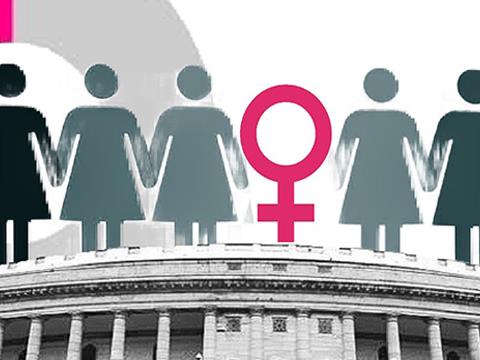 must end. The case for passing and implementing the Women’s Reservation law is no longer merely persuasive; it is compelling. Women are half the population, a near-half of the electorate, and central to every sphere of national life. Yet their presence in Parliament remains strikingly low. The Inter-Parliamentary Union’s 2022 review noted that women’s share in national parliaments globally stood at 26.5%, while India remained in the lowest quartile worldwide. In the Rajya Sabha, women held only 13.9% of seats.
India’s democratic claims ring hollow when women remain underrepresented in the institutions that frame laws and public policy. The issue is not tokenism. It is about the structure of representation itself. Women are not a marginal interest group. They are half the citizenry, and decisions made in Parliament affect their lives directly and in different ways. That alone creates a strong democratic basis for reserved representation. It can be seen that women’s exclusion is not accidental. It is sustained by entrenched social and institutional barriers that keep power overwhelmingly male.
A Democratic Deficit, Not a Symbolic Gap
The Women’s Reservation law is therefore not a favour to women. It is a constitutional and democratic correction. The Constitution already permits special provisions for women. India has long accepted reserved representation where structural exclusion is clear. If the republic recognises that democracy must be made socially representative in some cases, there is no reason to deny that logic to women, whose exclusion is both visible and longstanding. Women’s reservation is a long-delayed but necessary step toward meaningful democracy, inclusive development, and greater access to decision-making bodies.
The global evidence is equally clear. The IPU report found that legislated quotas remain a decisive factor in increasing women’s representation. Parliamentary chambers with legislated quotas, or a mix of legislated and party quotas, elected 30.9% women in 2022, compared with just 21.2% in chambers with no quotas. That is not a small difference. It shows that where inclusion is left to party discretion, old gatekeeping persists. Where the law intervenes, representation begins to change.
India also has its own proof. Reservations for women in panchayats and urban local bodies changed the grammar of grassroots politics. It did not weaken institutions. It widened participation, normalised women’s public leadership, and created a pipeline of political experience. Millions of women have since served in local government. It is difficult, then, to argue that reservation is acceptable at the village level but somehow improper in legislatures. The principle has already been accepted in practice. The unfinished task is to carry it upward.
This is why the women’s reservation law must now move from enactment to implementation. A law kept waiting by procedural conditions and political hesitation risks becoming a monument to insincerity.
Why Delay on Delimitation Cannot Defeat Women’s Rights
The principal argument now advanced by sections of the Opposition, especially Sonia Gandhi, is that delimitation, not women’s reservation, is the real issue. She has argued that the government is moving in haste, that delimitation should not disadvantage smaller States or those that succeeded in family planning, and that such far-reaching changes must follow fuller consultation. These federal concerns are not wholly without substance. Seat distribution in a union of unequal States is a serious matter. But that is precisely why the delimitation debate should be handled carefully and transparently, not why women’s reservation should be postponed again.
The crucial point is this: delimitation and women’s reservation are connected administratively, but they are not identical in their moral or political implications. One concerns the territorial apportionment of seats. The other concerns the inclusion of women in legislative power. It is neither fair nor democratic to keep women waiting until every larger federal dispute is fully settled. That logic can be extended indefinitely, and in India it often has been.
If the present amendment seeks to operationalise reservation by the 2029 Lok Sabha elections and proposes delimitation based on the 2011 Census rather than waiting for a later census cycle, then Parliament should debate the details rigorously. The formula for expansion, its impact on States, and the criteria for equity must all be examined openly. But the answer to such concerns cannot be yet another adjournment of women’s representation. Women have already waited through decades of committees, speeches, and evasions.
A mature political system should be able to do two things at once: protect federal fairness and deliver women’s representation. It should not pretend that one goal requires sacrificing the other. Indeed, collapsing the two issues into one risks using procedural complexity as a shield for political delay.
Congress’s Record Shows Why Intent Alone Is Not Enough
That brings us to the Congress and the UPA, whose criticism now carries a measure of irony. The history of the women’s reservation bill is long and frustrating. It was introduced in 1996 and revisited in 1997 and 1998, but it lapsed or stalled. Later efforts also ran into disruption, lack of consensus, and political retreat. For all its claims of support, the Congress-led UPA could not secure final passage when it had the opportunity. It may say today that it always backed the principle. But on legislation of this kind, principle without passage is not achievement.
This is why Sonia Gandhi’s present objections must be weighed against her party’s own record. Congress cannot claim moral ownership of a reform it failed to deliver. Nor can it use the complexities of delimitation as grounds for fresh hesitation when earlier hesitation already cost Indian women years of representation.
It is also worth recalling that objections around sub-quotas and representational complexity have historically been used to stall the Bill. Demands such as a quota within a quota, however serious in appearance, often became instruments to block the larger reform. This does not mean concerns about social diversity among women are irrelevant. It means they must not become a pretext for paralysis. In public policy, there are times when the right choice is to secure a major democratic gain now and refine its operation through further deliberation. Women’s reservation is one such case.
India has delayed this reform for far too long. The country cannot continue to celebrate women as voters, beneficiaries, and symbols, while denying them a proportionate place in legislatures. Parliament must not reduce women’s representation to a perpetual promise, renewed at every political convenience and deferred at every political difficulty.
The right course is straightforward. Pass the implementing amendment. Conduct the delimitation debate with transparency and seriousness. Reassure States that federal balance matters. But do not convert these concerns into an excuse for postponing women’s entry into legislative power.
Women’s reservation is not an act of generosity by political parties. It is a democratic entitlement long denied. It will not cure every defect in Indian politics. But it will change who speaks, who decides, and who is seen as fit to govern. India has discussed enough. It must now act.