

India’s identity as the “Pharmacy of the World” rests on scale, affordability and manufacturing strength.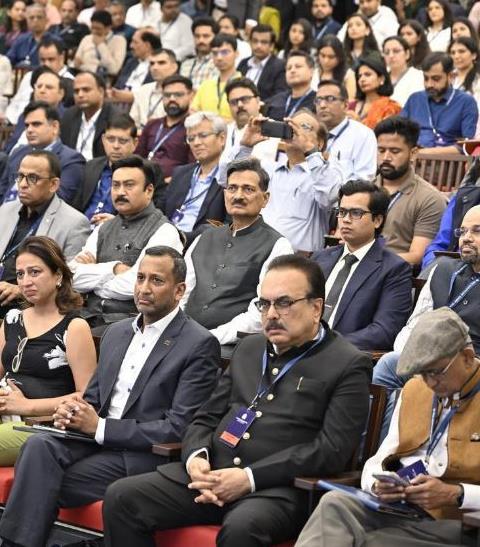 The next challenge is more demanding: becoming a global centre for discovery, clinical research and technology-led healthcare innovation.
That ambition framed the third IIMA Healthcare Summit 2026 in Ahmedabad, where Union Minister of State Anupriya Patel called for India to evolve from the “Pharmacy of the World” to the “Laboratory of the World”.
The phrase captures an important policy transition. During the COVID-19 pandemic, India proved it could manufacture and supply vaccines and essential medical products at an extraordinary scale. Indian companies supplied more than 200 countries, while the domestic vaccination programme administered over 2.2 billion doses. But manufacturing leadership alone may not define the next phase of global pharmaceutical competition.
The new frontier lies in original research, biologics, precision medicine, advanced clinical trials and artificial intelligence-assisted drug discovery.
Patel’s emphasis on AI was therefore significant. She identified its potential across the healthcare chain—from discovering drug candidates and designing personalised treatment to screening diseases, supporting clinical decisions and strengthening surveillance. Yet she also drew a critical boundary: AI must complement, not replace, human clinical judgement.
That distinction will become increasingly important as India moves from experimental AI pilots towards deployment across a health system serving more than a billion people. Healthcare algorithms can expand access and improve efficiency, but errors, biased datasets or opaque decision-making can have direct consequences for patients. Privacy, validation, accountability and clinician oversight cannot be afterthoughts.
India is beginning to build the institutional infrastructure for this transition. Centres of Excellence for AI in healthcare have been established at AIIMS New Delhi, PGIMER Chandigarh and AIIMS Rishikesh. The Ayushman Bharat Digital Mission is creating an interoperable digital health ecosystem, with more than 96 crore ABHA identities and over 1,000 crore health records digitally linked.
AI-enabled tools are already being used for tuberculosis and diabetic retinopathy. The eSanjeevani platform, which has served more than 20 crore patients, also shows how digital infrastructure can support clinical decision-making at scale.
The pharmaceutical sector presents an equally important opportunity. Large companies use AI in manufacturing, supply chains, and inventory management, while startups in Bengaluru and Hyderabad apply it to drug discovery. AI can rapidly screen molecular possibilities, identify promising candidates and reduce costly failures earlier in development.
But India’s innovation ecosystem still faces familiar constraints: access to capital, expensive software licences, high computing costs, specialised talent and limited access to quality datasets. These bottlenecks could determine whether India merely uses imported AI systems or builds globally competitive health technologies.
Government programmes are attempting to address that gap. The ₹5,000 crore Promotion of Research and Innovation in Pharma-MedTech scheme seeks to strengthen industry-academia collaboration and shift the sector towards innovation-led growth. The ₹10,000 crore Biopharma SHAKTI mission aims to expand capabilities in biologics and biosimilars while strengthening skills, regulation and clinical trials. The IndiaAI Mission and National Biopharma Mission provide additional support.
The harder question is whether these initiatives can converge.
India does not lack schemes, institutions or scientific talent. Its recurring weakness lies in connecting universities, hospitals, startups, industry, regulators and investors into functioning innovation ecosystems. The summit’s call to move from pilots to population-scale implementation therefore deserves attention.
Access to health and genomic data will be central. Such data can accelerate precision medicine and clinical research, but only within strong consent, privacy and governance frameworks. India must balance innovation with public trust.
The unveiling of the India Pharma Archives and a book documenting India’s COVID-19 vaccine journey offered an apt reminder of how far the industry has travelled—from dependence on imported medicines to becoming a global manufacturing powerhouse.
Its next transformation will be harder.
Becoming the “Laboratory of the World” will require more than technological enthusiasm. It will demand sustained research investment, credible regulation, stronger academia-industry partnerships, deeper clinical research capabilities and responsible access to data.
If India can combine these strengths with manufacturing scale and digital public infrastructure, AI could become a force multiplier for healthcare innovation. The opportunity is not to replace doctors with algorithms, but to equip scientists, clinicians and health systems with better tools—and move India from producing the world’s medicines to helping discover the medicines and healthcare solutions of the future.
