

New Delhi, 29 November 2026: India’s trade diplomacy is entering a decisive phase. Having secured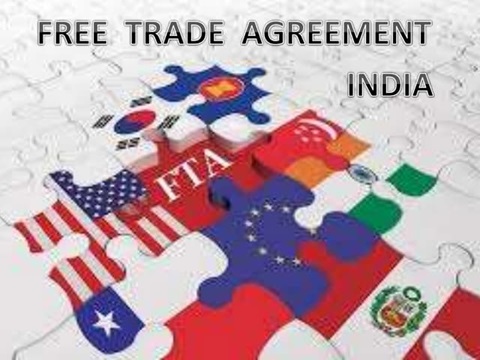 preferential access to some of the world’s largest economies, the country now faces a more fundamental challenge: translating diplomatic successes into commercial gains, employment opportunities and regional economic prosperity.
The Ministry of Commerce and Industry’s outreach workshops in Jaipur and Dehradun on November 27 reflect this emerging policy priority. Designed to familiarise exporters, entrepreneurs and micro, small and medium enterprises (MSEs) with opportunities under Free Trade Agreements (FTAs), these initiatives signal a shift towards decentralising India’s export economy.
According to Union Commerce and Industry Minister Piyush Goyal, India’s preferential market access has expanded from economies representing approximately $10 trillion in GDP to $70 trillion over the past four-and-a-half years. It could reach $85 trillion, nearly 76 per cent of global GDP, within the next 12 to 18 months.
However, access to markets does not automatically translate into exports. India’s ability to capitalise on these agreements will ultimately depend on domestic competitiveness, institutional preparedness and entrepreneurial capacity.
From Trade Diplomacy to Economic Diplomacy
India’s evolving FTA architecture represents a significant departure from its historically cautious approach to trade liberalisation. New agreements offer opportunities to diversify export destinations, attract investments and integrate domestic enterprises into global value chains.
Yet tariff reductions alone cannot guarantee commercial success. Exporters must navigate complex regulatory requirements, international quality standards, rules of origin, distribution networks and changing consumer preferences.
For smaller enterprises, these requirements can become formidable barriers. Unlike large corporations, MSMEs often lack dedicated international marketing teams, adequate working capital and expertise in trade compliance.
The Commerce Ministry’s outreach programme, therefore, seeks to address a critical information and implementation gap between trade negotiators and businesses operating at the grassroots.
Rajasthan: Turning Traditional Strengths into Global Opportunities
Rajasthan offers a compelling example of how regional economic strengths can benefit from international trade agreements.
The state recorded exports worth $11.18 billion in 2025–26 and aims to reach ₹1.5 lakh crore by 2029. Its established capabilities in jewellery, textiles, handicrafts, engineering and agricultural commodities provide a strong foundation for export expansion.
The elimination of tariffs on whole cumin seeds under the India-UAE trade agreement illustrates how preferential access can create opportunities for farmers and farmer-producer organisations, alongside conventional industrial exporters.
Rajasthan’s traditional artisan clusters could similarly benefit from greater access to affluent international consumer markets.
However, capturing these opportunities requires more than competitive pricing. Product design, geographical indication branding, traceability, packaging and reliable delivery systems will increasingly determine commercial success.
Connecting artisans directly with international buyers could also reduce dependence on intermediaries, allowing producers to retain a greater share of export earnings.
Uttarakhand: Building an Export Economy Beyond Industrial Centres
Uttarakhand presents a different but equally significant opportunity. Its export potential extends beyond established pharmaceutical and engineering industries to herbal products, organic foods, traditional handicrafts and mountain agriculture.
The state’s development challenge lies in overcoming geographical constraints while generating sustainable employment in hill districts.
Industrial decentralisation, common manufacturing facilities and improved logistics could help enterprises overcome the disadvantages of scale and distance.
Regional branding initiatives can further connect traditional products with international consumers seeking authenticity, sustainability and distinctive cultural identities.
For Uttarakhand, export promotion could become an instrument of rural economic transformation, women’s entrepreneurship and livelihood generation. It could also help address distress migration by creating viable economic opportunities closer to communities.
The Trillion-Dollar Export Ambition
India’s export performance provides an encouraging backdrop to these initiatives. Combined merchandise and services exports reached $568.84 billion between April and October 2026, registering year-on-year growth of 16.66 per cent.
October also witnessed substantial growth across employment-intensive sectors. Handicraft exports increased by 55.22 per cent, gems and jewellery by 40.06 per cent, carpets by 20.64 per cent and readymade garments by 20.33 per cent.
India has set an ambitious export target of $1 trillion for 2026–27.
Sustaining this momentum will require a broader exporter base rather than excessive dependence on established industrial clusters and large businesses.
The ₹25,060-crore Export Promotion Mission could play a catalytic role by addressing financing constraints, certification expenses, logistics costs and international market development.
Its effectiveness, however, must be measured through tangible business outcomes rather than expenditure or outreach numbers alone.
Making Districts the Engines of Global Trade
India’s next phase of export growth may increasingly emerge from its districts. The Districts as Export Hubs initiative provides an institutional foundation for connecting local productive capabilities with international demand.
District-level export facilitation centres, sector-specific mentoring, affordable trade finance and shared testing facilities could significantly improve MSME participation.
State governments must also become active partners in trade implementation, developing export strategies aligned with local industrial strengths and employment priorities.
A credible monitoring framework should track FTA utilisation, new exporters, employment generation, women’s participation and the diversification of export destinations.
The Jaipur and Dehradun workshops represent a promising beginning. Their long-term significance, however, will depend on sustained institutional engagement beyond awareness programmes.
India has negotiated its way into much of the global marketplace. The greater challenge now is ensuring that its smallest enterprises can find their place within it.
The ultimate success of India’s trade diplomacy will be measured not merely in trillion-dollar markets or export statistics, but in the prosperity it delivers to its people.
