

India’s negotiations on a Free Trade Agreement (FTA) with the Eurasian Economic Union (EAEU)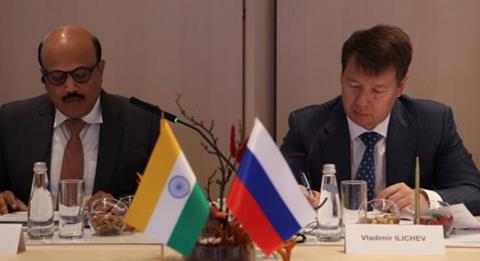 moved into a higher gear this week, with Commerce Secretary Rajesh Agrawal holding a series of high-level meetings in Moscow. The visit marks a significant push to diversify markets, strengthen supply chain resilience, and advance India’s broader goal of reaching USD 100 billion in bilateral trade with Russia by 2030.
Agrawal met Andrey Slepnev, Minister in charge of Trade at the Eurasian Economic Commission, and Mikhail Yurin, Russia’s Deputy Minister of Industry and Trade. He also addressed an industry plenary that brought together senior business leaders from both countries. The engagements were built on the recent meeting of the India–Russia Working Group on Trade and Economic Cooperation, reflecting a shared effort to restore predictability, expand commercial linkages and promote balanced trade growth.
A key focus in the meeting with Minister Slepnev was the roadmap for the India–EAEU FTA in goods. The Terms of Reference, signed on August 20, 2025, outline an 18-month work plan aimed at creating new opportunities for Indian exporters, including MSMEs, farmers, and fishermen. The two sides also agreed that services and investment will be examined as the negotiations advance, aligning with the strategic direction set by both leaderships.
Agrawal’s discussions with Deputy Minister Yurin centred on accelerating trade diversification and building resilient supply chains. The talks focused on cooperation in critical minerals and outlined a time-bound plan across priority sectors, including pharmaceuticals, telecommunications equipment, machinery, leather, automobiles, and chemicals. Both countries agreed to institutionalise quarterly regulator-level engagement to resolve certification issues, streamline listings for agricultural and marine exporters, and address non-tariff barriers, including monopolistic practices. The dialogue also included practical solutions on logistics, payments and standards to improve ease of doing business.
At the industry plenary, Agrawal urged companies to align their investment and production plans with the bilateral trade target for 2030. He highlighted India’s ongoing logistics upgrades, digital public infrastructure and opportunities for co-production across goods and services. Industry participants emphasised the need to widen the export basket, de-risk supply chains and focus on converting planned collaborations into executable contracts that can generate jobs and long-term economic gains.
As India positions itself as a trusted economic partner for both developed and developing economies, the Moscow engagements signal a more profound commitment to expanding trade with Russia and the wider Eurasian region. The progress on the FTA also reinforces India’s long-term vision of becoming a developed nation—Viksit Bharat—by 2047.
