

In the heart of New Delhi, amid the bustling corridors of Bharat Mandapam, a pivotal chapter in India’s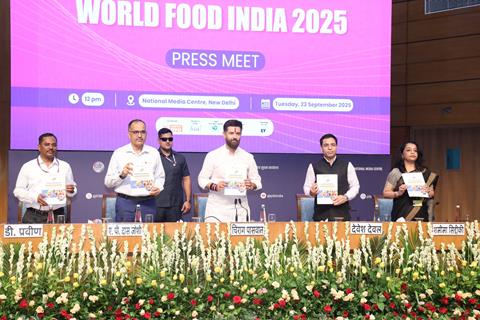 economic narrative is set to unfold. On September 25, 2025, Prime Minister Narendra Modi will inaugurate the fourth edition of World Food India (WFI) 2025, a sprawling event spanning 100,000 square meters and running through September 28. This isn’t just another trade fair; it’s a strategic symphony of innovation, diplomacy, and sustainability, orchestrated by the Ministry of Food Processing Industries (MoFPI) to catapult India onto the world stage as the “Food Basket of the World.”
Union Minister Chirag Paswan succinctly captures the essence: “World Food India is not merely a trade show, but a transformative platform to position India as a global hub for food innovation, investment, and sustainability.” Under Modi’s leadership, the event embodies India’s ambition to build “sustainable, inclusive, and future-ready food systems.” The inaugural ceremony, graced by dignitaries including Russia’s Deputy Prime Minister Dmitry Patrushev, Union Minister Nitin Gadkari, Paswan himself, and Minister of State Ravneet Singh Bittu, underscores the international stakes. With participation from over 21 countries, 21 Indian states and union territories, 10 central ministries, and five allied organisations, WFI 2025 promises the largest gathering of food processing stakeholders in India’s history.
The event’s scale is staggering, featuring more than 1,700 exhibitors, 500 international buyers, and representatives from over 100 countries. Partner countries New Zealand and Saudi Arabia, alongside focus nations Japan, Russia, the UAE, and Vietnam, signal targeted alliances in trade and technology transfer. This mosaic of global engagement reflects India’s evolving foreign policy, which blends economic outreach with soft power through cultural initiatives such as cuisine and agriculture. Over 45 knowledge sessions—encompassing thematic discussions, state-specific conferences, and CXO roundtables with 100-plus global agri-food leaders—will dissect pressing issues, fostering collaborations that could reshape supply chains.
Parallel events amplify the event’s depth. The 3rd Global Food Regulators Summit, hosted by the Food Safety and Standards Authority of India (FSSAI), aims to harmonise international food safety standards, addressing a critical barrier to exports. The 24th India International Seafood Show, organised by the Seafood Exporters Association of India (SEAI), highlights India’s burgeoning seafood sector, which already makes a significant contribution to rural economies. Meanwhile, the Agricultural and Processed Food Products Export Development Authority (APEDA)’s Reverse Buyer-Seller Meet, drawing over 1,000 buyers, is poised to unlock multimillion-dollar deals, bolstering India’s export figures amid global demand for diverse, sustainable proteins.
At its core, WFI 2025 revolves around five pillars: Sustainability and Net Zero Food Processing; India as a Global Food Processing Hub; Frontiers in Food Processing, Products, and Packaging Technologies; Food for Nutrition, Health, and Wellness; and Livestock & Marine Products Accelerating the Indian Rural Economy. These themes align seamlessly with national priorities, such as Atmanirbhar Bharat and the Sustainable Development Goals. In a post-pandemic world grappling with climate change and food insecurity, India’s emphasis on net-zero practices could position it as a model for emerging economies. Special exhibitions, including international pavilions, a Pet Food Pavilion, a Technology Pavilion, and MoFPI’s Start-up Innovation Pavilion, showcase the role of innovation in driving growth. The sector, currently valued at over $500 billion, has untapped potential; events like this could accelerate its 8-10% annual growth, creating jobs in rural areas where 70% of India’s workforce resides.
Adding an educational layer, Paswan launched a publication titled “Frequently Asked Questions on Different Concepts of Food Processing.” Crafted with industry input, it debunks myths about processed foods, promoting science-backed consumer awareness. This move addresses scepticism, paving the way for greater domestic acceptance and export appeal.
Yet, WFI’s actual impact lies in its ripple effects. By acknowledging contributions from ministries such as Agriculture & Farmers Welfare, Fisheries, Animal Husbandry & Dairying, MSME, APEDA, and MPEDA, as well as commodity boards, the event fosters inter-governmental synergy. In an era of geopolitical tensions and supply disruptions, India’s push for self-reliance in food processing could mitigate vulnerabilities, enhancing food security for its 1.4 billion people while exporting surplus innovations.
As the curtains rise on September 25, WFI 2025 isn’t merely an event—it’s a declaration. India, with its rich agricultural heritage and tech-savvy youth, is ready to lead the global food revolution. The collaborations forged here could yield sustainable dividends, transforming farms into factories and positioning the nation as a vital player in the world’s food supply. In Modi’s vision, this is more than trade; it’s India’s flavourful march toward economic superpower status.
