

New Delhi, 20 August 2025 – A landmark national conference on Rare Diseases, jointly organised by the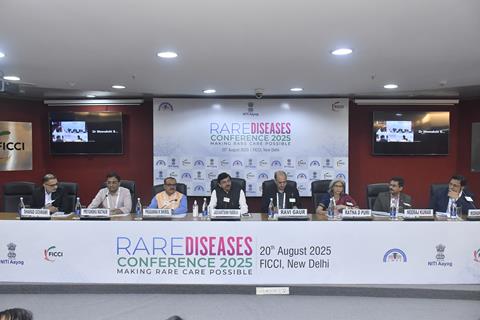 Federation of Indian Chambers of Commerce and Industry (FICCI), NITI Aayog, and the Indian Medical Parliamentarians’ Forum (IMPF), called for urgent, coordinated action to address India’s rare disease challenge. The deliberations emphasised the critical need for indigenous manufacturing of therapies, stronger patient registries, affordable access mechanisms, and multi-ministerial coordination to make “rare care” possible for all.
The conference brought together senior policymakers, Members of Parliament, healthcare leaders, industry representatives, researchers, and patient advocacy groups. Over the course of three thematic sessions, participants highlighted that rare diseases, though individually affecting small numbers, collectively impact a significant number of Indians—making them both a public health crisis and a profound societal challenge.
India’s Rare Disease Burden
Despite their individual rarity, collectively, rare diseases impact an estimated 72 to 96 million Indians—nearly one in twenty citizens. Approximately 450 rare diseases have been officially recorded in India, with many more likely undiagnosed or undocumented. Most of these conditions are chronic, progressive, and life-threatening, disproportionately affecting children and placing heavy emotional and financial burdens on families.
Recognising this, the Ministry of Health & Family Welfare (MoHFW) introduced the National Policy for Rare Diseases (NPRD) in March 2021. The policy categorises rare diseases into three groups based on treatment availability and provides financial support of up to ₹50 lakhs per patient for treatment at notified Centres of Excellence (CoEs). As of August 2024, 63 rare diseases have been included, benefiting 1,118 patients nationwide.
Delivering the inaugural address, Dr. Vinod K Paul, Member (Health), NITI Aayog, underlined the need for an ecosystem that ensures faster diagnosis, equitable treatment, and sustainable partnerships.
“Rare diseases are estimated to affect close to 90 million Indians collectively. With only a fraction of the 7,000 rare diseases having approved therapies, indigenous manufacturing, stronger registries, and multi-ministerial coordination must be prioritised. The principle of ‘leave no one behind’ must serve as our guiding vision.”
Parliament’s Voice: Keeping Rare Diseases on the National Agenda
Dr. Anil S. Bonde, MP and Chairperson, IMPF, stressed that rare diseases cannot be relegated to the margins of policy debates.
“Though individually small, rare diseases impose a severe medical, social, and financial burden. Policymakers have a responsibility to ensure that no patient or family feels invisible. Parliament has a duty to keep rare diseases firmly on the national health agenda.”
Mr. Amit Agrawal, Secretary, Department of Pharmaceuticals, called rare disease care both a medical challenge and a moral responsibility.
“Addressing rare diseases must be seen not merely as a medical challenge but as a moral responsibility. Compassion, innovation, and the courage to forge new partnerships are called for in this context. Policies must be designed to encourage research while ensuring that breakthroughs are ultimately made accessible to patients in need.”
Industry Commitment and Patient Struggles
Mr. Amitabh Dube, Co-Chair, FICCI Pharma Committee & Managing Director, Novartis India, spoke with urgency about the extraordinary struggles that patients and caregivers endure daily.
“The struggles patients face are extraordinary, but access remains the single biggest challenge. This conference is about building partnerships to ensure that hope is not out of reach for families fighting rare diseases.”
Industry leaders echoed that the challenges extend beyond access to therapies—they include delays in diagnosis, lack of standardised care pathways, and financial hardship for families. Patient representatives highlighted that many rare diseases disproportionately affect children, forcing parents to navigate a cycle of uncertainty and social stigma.
FICCI members stressed that the industry is committed to playing a proactive role by investing in R&D, partnering with academia, and working closely with policymakers to design financing and access models. Companies are increasingly exploring patient assistance programs, CSR initiatives, and global collaborations to ensure therapies do not remain out of reach due to cost barriers.
Session 1: Pioneering Advanced Therapies Chaired by Dr. Vinod K Paul, this session explored how gene and cell therapies could transform rare disease care.
Dr. Rajeev Singh Raghuvanshi, Drugs Controller General, CDSCO, MoHFW, emphasised the regulatory commitment to enabling innovation safely:
“Advanced therapies hold the key to transforming rare disease care. CDSCO is committed to enabling safe, timely access as we integrate these innovations into India’s public healthcare system.”
Prof. Madhulika Kabra, Emeritus Scientist, ICMR, underscored the diagnostic challenge:
“Early diagnosis is crucial—not just for treatment but for understanding rare diseases. It requires focused research to identify and manage these conditions effectively.”
Speakers stressed the need for expedited regulatory pathways, research funding, patient advocacy integration, and public–private partnerships to make advanced therapies accessible to Indian patients.
Dr. Jashvantsinh Parmar, MP and Joint Convenor, IMPF, chaired session 2, Strengthening Centres of Excellence (CoEs), noting that CoEs are “lifelines for families battling rare diseases.”
“Centres of Excellence must be well-governed, adequately resourced, and interoperable across regions. We need hub-and-spoke models, digital registries, and structured prevention programs to ensure consistent, compassionate, and patient-centric care.”
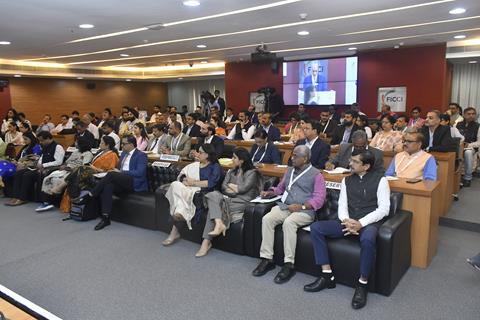 This session emphasised that CoEs are not just treatment facilities but hubs for research, training, and advocacy. Experts called for standardised treatment protocols across centres so that quality care is consistent nationwide, regardless of geography.
Patient advocacy groups urged policymakers to integrate lived experiences into policy frameworks, arguing that “no policy is complete unless it reflects real-world challenges.” Participants also highlighted the role of PPPs in equipping CoEs with advanced technologies, clinical infrastructure, and trained specialists.
By adopting hub-and-spoke models, CoEs could extend reach into underserved regions while remaining connected to central registries and specialised labs. Stakeholders agreed that such an approach is vital for reducing inequities and ensuring early diagnosis and intervention at scale.
The third session addressed perhaps the most urgent barrier: affordability. Rare disease therapies, especially gene and cell therapies, often carry prohibitive costs.
Speakers proposed pooled funding models that integrate government budgets, insurance schemes, CSR initiatives, and philanthropy to build sustainable financing. Centralised procurement was identified as a way to reduce costs and negotiate fairer pricing with manufacturers.
Participants also discussed outcome-based pricing, ensuring that payments for therapies align with demonstrated clinical results, thereby reducing financial risk.
Representatives from NITI Aayog, AIIMS, IIM Ahmedabad, Indian Oil, and industry leaders highlighted the potential of blending public and private resources to create long-term affordability.
Kerala’s newborn screening program, enabling early detection of genetic disorders, was presented as a replicable state-level model. At the same time, Rajasthan’s policy initiatives and patient support mechanisms were cited as examples of proactive state leadership.
Patient voices again reminded participants of the stigma and isolation faced by families, making it clear that financing models must be patient-centric, transparent, and inclusive. The discussion closed with a consensus that rare disease care can only succeed if affordability remains the central pillar of policy and practice.
The conference also examined international models of government–industry collaboration.
- The United Kingdom’s 100,000 Genomes Project, launched in 2013, demonstrated how large-scale genome sequencing can transform rare disease diagnosis and accelerate therapy development.
- The Bespoke Gene Therapy Consortium (BGTC) in the United States, a collaboration between the FDA, NIH, non-profits, and industry, highlighted how multi-sector partnerships can accelerate the development of advanced therapies for rare diseases.
These global experiences underscored the need for collaborative research ecosystems, digitisation, and early detection mechanisms to advance rare disease care in India.
A Collective Pledge: Towards Rare Care for All
The conference concluded with a consensus that rare care can only be realised when therapies are affordable, early diagnosis is widespread, and partnerships are sustained. Stakeholders reaffirmed their commitment to bridging gaps between policy, science, and patient needs.
“Today’s conference is more than just an event. It is a collective pledge—to transform how India views, treats, and supports those living with rare diseases. In India, we are building for 2047, no disease should be too rare to matter, and no life too small to count.” – Dr. Anil Bonde.
