

Parliament is where democracy must do its hardest work. Elections establish political authority, but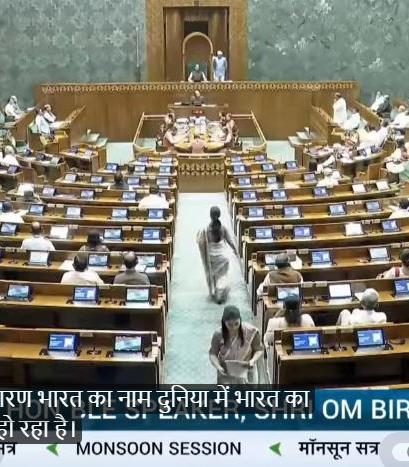 Parliament must convert that authority into accountable government. It makes laws, approves public money, questions Ministers, examines policy and gives disagreement a constitutional forum. Its efficiency, therefore, cannot be measured merely by the number of Bills passed or the hours recorded on a productivity chart. The real test is whether parliamentary time produces scrutiny, deliberation and public accountability.
The record of India’s Parliament between 2024 and 2026 presents a striking paradox. The 18th Lok Sabha began with considerable promise. Across its inaugural and Budget Sessions in 2024, Lok Sabha functioned for 123 per cent of scheduled time and Rajya Sabha for 110 per cent. Question Hour operated for 97 per cent of scheduled time in Lok Sabha and 99 per cent in Rajya Sabha. Budget debates were relatively substantial. Eighty-two per cent of first-term MPs participated in debates. These were encouraging signs of a House willing to work beyond its allotted hours.
Two years later, the picture looks very different. In the Monsoon Session of 2026, Lok Sabha functioned for only 15 per cent of scheduled time and Rajya Sabha for 33 per cent. Question Hour in Lok Sabha lasted just nine minutes across the entire 19-sitting session. Only two questions received oral answers. Yet 11 Bills were passed. Nine of them passed through Lok Sabha without any MP, apart from the concerned Minister, speaking on them.
This contrast exposes the weakness of our conventional idea of parliamentary productivity. A legislature may pass laws quickly and still perform poorly as a democratic institution. Indeed, speed can sometimes conceal the absence of scrutiny.
Productivity is not effectiveness
Parliamentary productivity is usually expressed as the proportion of scheduled time used. It is a useful administrative measure, but a poor constitutional one. A House can work beyond scheduled hours and still devote too little time to oversight. Conversely, a difficult debate that delays legislation may represent democracy working exactly as intended.
The trajectory since 2024 illustrates this problem. Lok Sabha productivity moved from 123 per cent in the first two sessions of the 18th Lok Sabha to 52 per cent in Winter 2024, recovered to 111 per cent in Budget 2025, collapsed to 29 per cent during Monsoon 2025, rose above 100 per cent in Winter 2025, stood at 86 per cent in Budget 2026, and then fell to 15 per cent in Monsoon 2026.
Such swings tell us something important. India does not simply have a Parliament that works too little. It has a Parliament whose functioning is increasingly unpredictable. Strong sessions coexist with near washouts. Intense legislative activity coexists with prolonged disruption. This instability weakens continuity in scrutiny and makes parliamentary time vulnerable to political confrontation.
The deeper concern is what survives when time becomes scarce. Law-making often does. Accountability does not.
Question Hour is particularly revealing. It is one of Parliament’s most direct instruments for holding the executive to account. Ministers must answer publicly, MPs can ask supplementary questions, and information enters the official record. In 2024, Question Hour functioned almost fully. During Monsoon 2025, it fell to 23 per cent of scheduled time in Lok Sabha and only 6 per cent in Rajya Sabha. By Monsoon 2026, Lok Sabha managed merely 1 per cent.
Written answers remain valuable. But they cannot replace a Minister standing in the House, answering a question and facing an unexpected supplementary. The democratic value lies precisely in that exchange.
Scrutiny cannot become collateral damage
The same concern applies to legislation. Parliament passed 14 non-financial Bills during the disrupted Monsoon Session of 2025. Several received limited discussion. In Monsoon 2026, 11 Bills were passed despite Lok Sabha functioning for only 15 per cent of scheduled time. One important Bill on public examinations received nearly 11 hours of discussion and participation from 48 MPs. That demonstrates that detailed debate remains possible when political space is created for it.
But other Bills passed within minutes. That should concern government and opposition alike. A Bill is not improved simply because it crosses the legislative finish line. Parliamentary debate can identify drafting defects, unintended consequences, federal concerns, implementation difficulties and citizen interests that executive drafting may overlook.
Committees provide another route to serious scrutiny. Here, there is some improvement. By the end of Monsoon 2026, about 21 per cent of Bills introduced in the 18th Lok Sabha had been referred to parliamentary committees, compared with 16 per cent during the 17th Lok Sabha. Yet this remains below the 28 per cent recorded in the 16th Lok Sabha and far below earlier periods when committee examination was more routine.
Budget scrutiny is equally important. Parliament does not merely authorise laws; it controls the public purse. Yet 89 per cent of expenditure was passed without discussion in 2024. In 2026, the figure improved to 77 per cent, but that still means more than three-fourths of expenditure escaped detailed discussion on the floor. Five Ministries were listed for debate on their Demands for Grants in 2026; only Agriculture and Railways were discussed.
When Parliament approves vast public expenditure without adequate debate, an essential part of representative government becomes procedural rather than substantive.
More days, better rules, shared responsibility
A structural problem also exists: Parliament meets too infrequently. Lok Sabha averaged about 121 sitting days annually between 1952 and 1970. Since 2000, the average has fallen to roughly 68 days. The 17th Lok Sabha held only 274 sittings during its full five-year term, the lowest for any full-term Lok Sabha.
A country of India’s size, policy complexity and administrative reach needs more parliamentary time, not less. More sittings would not automatically improve debate, but they would reduce the pressure to compress legislation, budgets and accountability into narrow windows.
Reform must begin with a more meaningful definition of efficiency. Parliament should publish a broader effectiveness scorecard measuring five things: time utilised, legislative scrutiny, executive accountability, financial scrutiny and Member participation. A session that passes many Bills but loses Question Hour should not be celebrated as efficient. Nor should disruption be treated as costless political theatre.
A minimum annual sitting calendar deserves serious consideration. Important Bills should ordinarily receive adequate notice before passage. Committee referral should become the norm for substantial legislation, with exceptions explained publicly. Protected time for Question Hour and Private Members’ Business should be respected. The office of Deputy Speaker, vacant throughout the 17th Lok Sabha and still unfilled two years into the 18th, should not remain an institutional afterthought.
None of these reforms can be imposed by rules alone. Government must create room for debate and resist unnecessary legislative haste. Opposition parties must use parliamentary instruments without routinely making Parliament itself unusable. Presiding Officers must protect both orderly functioning and legitimate dissent.
Parliament is designed to accommodate disagreement, not eliminate it. Noise, contest and sharp political argument are not signs of democratic failure. But when disagreement repeatedly prevents questions, debate and scrutiny, politics begins to consume the institution through which it is meant to operate.
India does not need a silent Parliament. Nor does it need a Parliament that merely processes government business faster. It needs a Parliament that works longer, questions harder, examines legislation carefully and gives every major public decision the legitimacy of visible deliberation.
Efficiency in democracy is not speed. It is the disciplined use of time to make power answerable. That is the measure by which Parliament should judge itself—and by which citizens should judge Parliament.