

National Press Day in New Delhi this year unfolded against a complex backdrop—an information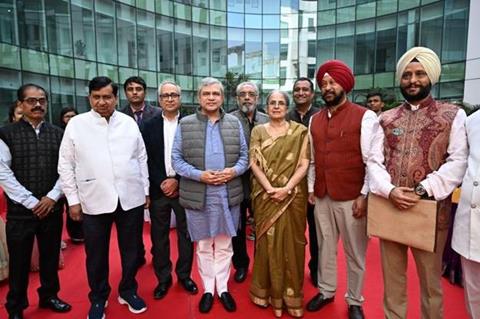 ecosystem shaken by the rapid rise of artificial intelligence, deepening digital echo chambers, and an unprecedented flood of misinformation. At the National Media Centre, senior leaders from the Press Council of India (PCI), Press Trust of India (PTI), and the Government underscored a standard message: press credibility is the nation’s collective responsibility, and restoring it must be the profession’s highest priority.
The theme for 2024, “Safeguarding Press Credibility amidst Rising Misinformation”, shaped the day’s deliberations. PCI Chairperson Justice (Retd.) Ranjana Prakash Desai set the tone by declaring that no technology—however advanced—can replace the human mind. “AI can never replace the judgement, conscience and sense of responsibility which guide every journalist,” she said, urging media organisations and reporters to resist shortcuts and uphold the values that define ethical journalism.
Justice Desai reminded the audience that PCI’s mandate is twofold: to protect press freedom and to ensure that journalism remains rooted in honesty, accuracy, and fairness. She expressed concern over the increasing misuse of technology and the rising tide of misinformation, which is eroding public trust. The PCI, she said, has strengthened its monitoring mechanisms through the establishment of fact-finding teams, committees, and advisory processes to ensure greater accountability. She also emphasised the importance of enhancing financial security for journalists through welfare programmes and insurance, noting that economic vulnerability can compromise editorial independence.
Union Minister Shri Ashwini Vaishnaw, along with MoS Dr. L. Murugan and senior officials—including Information & Broadcasting Secretary Sanjay Jaju—graced the event, signalling the government’s support for safeguarding the integrity of India’s media ecosystem.
In his keynote address, PTI CEO Vijay Joshi offered a candid and urgent assessment of the moment. He argued that the fundamental crisis facing journalism today is not technological, but ethical. “Let accuracy take over speed in traditional media and take over engagement as defined by AI algorithms in digital media,” he urged, pointing out how the modern incentives of virality and velocity distort news values and reward sensationalism.
Joshi identified paid news, advertorials and yellow journalism as persistent threats that have weakened the moral authority of the press. The digital transition, he noted, has further fragmented the public sphere, trapping citizens in information bubbles shaped by algorithms rather than editorial judgment. The pandemic demonstrated how rapidly falsehood and truth can become indistinguishable—a challenge now amplified by generative AI.
To counter this, Joshi emphasised the need for shared responsibility among media houses, editors and reporters. He invoked PTI’s legacy—founded by 99 newspapers on principles of independence, fairness and accuracy—as an example of how credibility must be built and defended every day. He highlighted PTI’s Fact Check initiatives and multi-layered verification systems as tools to confront the “infodemic.”
Both leaders agreed that safeguarding credibility in the AI age requires training young journalists in ethics, critical thinking and verification. Press freedom, Joshi said, “is not a licence to pollute the information ecosystem,” but a public service built entirely on trust.
As India’s information landscape evolves, the National Press Day discourse made it clear: technology may transform journalism, but it is human judgement, integrity and responsibility that will determine whether the press remains the moral compass of the world’s largest democracy.
