

As the Union Public Service Commission enters its second century, the government is signalling that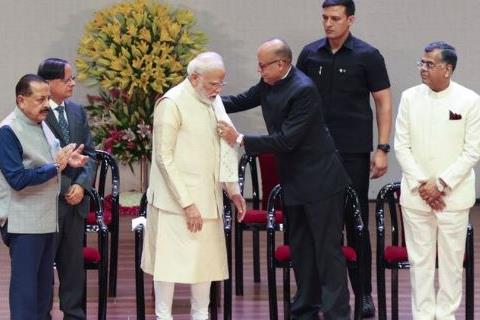 India’s civil-service recruitment system must change with the country it serves.
Speaking at the UPSC centenary celebrations in New Delhi on October 1, Prime Minister Narendra Modi placed the institution’s future within the larger ambition of building a developed India by 2047. His central message was clear: recruitment can no longer focus only on what candidates know. It must increasingly examine why they want to enter public service and whether they possess the temperament to solve complex public problems.
The argument marks an important shift in the debate over civil-service reform. UPSC has traditionally been judged by the integrity, impartiality and competitiveness of its examinations. Modi sought to broaden that framework. He suggested the selection system must identify people motivated by public service rather than public office.
From knowledge to administrative capability
For decades, the Civil Services Examination has remained one of India’s most demanding competitive examinations. Yet the administrative environment confronting tomorrow’s officers will be very different from what earlier generations faced.
India will be more urbanised, technologically connected and economically complex by 2047. Citizens accustomed to instant digital services will increasingly expect government systems to respond with similar speed. Artificial intelligence will accelerate these expectations while creating new regulatory and administrative challenges.
The implication is significant. Academic knowledge and analytical writing will remain important, but they may no longer be sufficient measures of administrative potential.
Modi identified information warfare, deepfakes, algorithmic bias and climate justice among the challenges future administrators will confront. Recruitment systems, he argued, should therefore place greater weight on foresight and complex problem-solving ability.
This raises a difficult institutional question: how can qualities such as empathy, motivation, judgement and foresight be evaluated objectively without weakening the merit-based character of recruitment?
That question may become central to the next phase of UPSC reform. Any redesign of selection parameters would have to preserve transparency and comparability while avoiding excessive subjectivity. The Prime Minister himself underlined that the Commission’s independence, impartiality, merit, confidentiality and fairness must remain uncompromised.
Citizen First as an administrative doctrine
The speech also sought to redefine the relationship between citizens and the bureaucracy.
Modi contrasted the old “Mai-Baap” administrative culture with the idea of “Nagrik Devo Bhava”, placing citizen service at the centre of governance. He linked this approach to three principles: pro-people, proactive and good governance.
For civil servants, this would require more than efficiently implementing government orders. Officers would be expected to anticipate problems, innovate, reduce difficulties faced by citizens and assess how laws and administrative decisions actually affect people.
This is particularly relevant at the district and local levels, where citizens experience the state most directly. A district magistrate, police officer, tax official or departmental administrator often becomes the visible face of government. The quality of recruitment therefore affects not merely bureaucratic performance but public trust.
Modi framed this responsibility through two touchstones — “Nation First” and “Citizen First” — arguing that recruitment institutions must produce administrators capable of serving both national priorities and everyday citizen needs.
Making recruitment faster and fairer
Another potentially consequential proposal concerned recruitment duration.
The Prime Minister called for “Time Certainty” in examinations, arguing that unnecessarily prolonged recruitment cycles impose financial costs on candidates through coaching fees, rent, travel and other expenses. Reducing these delays, he said, should therefore be treated as an equity reform rather than merely an administrative efficiency measure.
This perspective matters because the scale of competition has transformed dramatically. Candidate participation has increased around 45-fold since UPSC’s 50th anniversary in 1976. At the same time, access has widened geographically and socially. Women, who represented only around 3 per cent of civil servants in 1952, now account for more than 30 per cent, according to figures cited in the speech.
Technology could help manage this growing scale. Modi suggested greater use of digital platforms, institutional cross-learning and Mission Karmayogi’s i-GOT infrastructure to strengthen UPSC and state public-service commissions.
The centenary, therefore, was more than an institutional commemoration. It presented a reform agenda.
UPSC’s first century helped create the administrative architecture of independent India. Its second will test whether that architecture can adapt to artificial intelligence, rapidly rising citizen expectations and increasingly complex governance challenges without weakening the institutional credibility painstakingly built over 100 years.
That balance — adaptation without dilution — may ultimately define the Commission’s next century.
