

New Delhi/Washington, February 7, 2026: The United States and India have agreed on a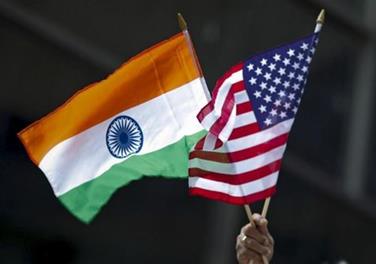 framework for an Interim Agreement aimed at “reciprocal and mutually beneficial” trade—an early, politically salient down payment on the broader U.S.–India Bilateral Trade Agreement (BTA) talks launched by President Donald J. Trump and Prime Minister Narendra Modi on February 13, 2025.
At one level, the framework is a classic tariff-for-access trade bargain. India signals substantial tariff cuts on U.S. industrial goods and a wide basket of farm and food items—from DDGs and sorghum feed to tree nuts, fruit, soybean oil, and wine and spirits. In return, the United States commits to a reciprocal tariff rate of 18% on Indian-origin goods under Executive Order 14257 (April 2, 2025)—but with a clear off-ramp: if the interim deal is successfully concluded, Washington says it will remove the reciprocal tariff on a “wide range” of products listed for aligned partners, including generic pharmaceuticals, gems and diamonds, and aircraft parts.
What the framework is really doing
The text is not just about headline tariffs. It reads like an attempt to address several long-running irritants while aligning the two economies for a more strategic, supply-chain-centric partnership.
1) Non-tariff barriers move to the centre.
India commits to address “long-standing barriers” in medical devices, remove restrictive import licensing that delays U.S. ICT goods, and decide—within six months of the agreement entering into force—whether U.S. or international standards (including testing requirements) are acceptable for specified sectors. For U.S. exporters, these “behind-the-border” frictions often matter as much as tariffs. For India, the promise is to streamline conformity assessment and standard recognition without conceding sovereignty over regulation.
2) Section 232-style national security tariffs get partially defused.
The U.S. indicates it will remove certain tariffs on Indian aircraft and aircraft parts linked to national-security proclamations covering aluminium and steel (March 8, 2018) and copper (July 30, 2025). It also signals a preferential tariff-rate quota for Indian automotive parts under the U.S. auto parts national security action (Proclamation 9888). However, pharmaceuticals are explicitly tied to the findings of a Section 232 investigation into pharmaceuticals and ingredients—meaning the most commercially important carve-outs could still be contingent and politically sensitive in Washington.
3) Rules of origin and economic security are explicit.
Both sides will establish rules of origin so that benefits “accrue predominantly” to the U.S. and India, and they commit to aligning on “economic security” to address “non-market policies of third parties,” as well as cooperation on investment reviews and export controls. This is trade policy borrowing language from geopolitics—an attempt to harden supply chains and reduce exposure to coercive or subsidised competition.
4) A massive purchase pledge does diplomatic work—but raises feasibility questions.
India “intends to purchase $500 billion” of U.S. energy, aircraft and parts, precious metals, technology products, and coking coal over five years, and both sides plan to expand trade in technology products, including GPUs and data-centre goods. Such numbers create momentum and signal strategic alignment, but they also invite scrutiny on financing, demand, and whether purchases are trade-diverting rather than trade-creating.
Who gains, who feels the squeeze
If implemented as described, the interim framework creates clear sectoral winners and political pressure points.
- U.S. agriculture and food exporters are positioned to gain from India’s tariff cuts—especially in categories that do not directly collide with India’s most politically protected staples.
- Indian exporters get a predictable U.S. tariff line at 18% for covered goods, with a pathway to relief for big-ticket categories like generic pharmaceuticals and gems/diamonds if the interim agreement is concluded and operationalised.
- Medical devices and ICT are the real test of regulatory trust. India’s commitments on licensing, standards acceptance, and NTBs will be watched closely by U.S. firms—and by Indian regulators wary of safety, pricing, and domestic manufacturing priorities.
- Textiles, leather, footwear, chemicals, and home décor remain exposed to the 18% U.S. reciprocal tariff in the near term—important because these sectors are employment-heavy and politically salient in India.
Why this matters—and what could still derail it
This framework is best read as a politically timed stabiliser rather than a completed trade deal. It gives both capitals a narrative of progress while deferring the hardest bargains to the full BTA.
Three things will determine whether it becomes a genuine breakthrough:
- Implementation discipline on non-tariff barriers. The six-month clock on standards recognition is a make-or-break operational metric; without it, tariff concessions may not translate into market access.
- How the U.S. treats pharmaceuticals under Section 232. If national-security logic dominates, India’s expectation of tariff relief for generics could get trapped in Washington’s domestic politics.
- Whether the $500 billion purchase intent is credible and additional. If it is perceived as aspirational or merely as relabelling existing import trajectories, it will lose its power as a confidence-building anchor.
For now, the framework’s biggest strategic value is that it ties trade to supply-chain resilience, export controls, and digital trade rules—a sign that the U.S.–India economic relationship is being redesigned around competitive blocs and trusted networks, not just tariffs.
