

Robotics may soon move beyond the operating theatre. That was the central message from Union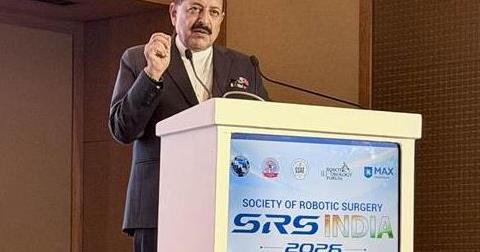 Science and Technology Minister Dr Jitendra Singh at the International Conference of the Society of Robotic Surgery. He argued that robotics, combined with artificial intelligence (AI), genomics and nanoscience, could become an enabling technology across medical specialities, diagnostics and treatment.
The argument is significant because India’s healthcare technology debate is beginning to shift. Robotics is no longer being viewed only as an expensive surgical aid for sophisticated hospitals. It is increasingly being positioned within a larger architecture of precision and personalised medicine.
Taking specialists to patients
Dr Singh said robotics could eventually support medicine across specialities, from cardiology and endocrinology to diagnostics and remote clinical interventions. Tele-robotics, in particular, could change the traditional relationship between patients and specialists.
Instead of requiring patients to travel to specialists, technology could take specialist expertise to patients.
For India, this is more than a technological proposition. It could help address geographical and capacity constraints.
Specialist doctors, advanced diagnostic facilities and tertiary-care hospitals remain concentrated largely in cities. People in remote regions often face long journeys, delayed diagnosis, and substantial costs to access specialist care.
Tele-robotics could help bridge some of these gaps, provided connectivity, equipment standards and clinical protocols remain reliable.
Dr Singh cited his experience of robotic ultrasonography performed remotely on a person around 10,000 kilometres away in Antarctica. Such applications could eventually prove valuable in border areas, islands, difficult terrain and districts with limited specialist availability.
But technology alone cannot solve India’s healthcare access problem. Robotic systems remain capital-intensive. Wider deployment would require trained clinicians, biomedical engineers, maintenance networks, reliable digital connectivity and strong hospital infrastructure. Without affordable models and wider public-sector adoption, advanced technologies could deepen the divide between high-end urban healthcare and underserved districts.
Precision medicine gathers momentum
The larger opportunity lies in combining robotics with India’s growing AI, data and genomics ecosystem.
The GenomeIndia programme has completed whole-genome sequencing of more than 10,000 individuals representing diverse Indian population groups. The data are intended to support research into genetic variations, diseases, drug responses and population-specific healthcare interventions.
This could provide an important foundation for precision medicine. Unlike conventional approaches that broadly treat patients with the same disease similarly, precision medicine seeks to tailor prevention and treatment according to genetic profile, environment, lifestyle and other individual factors.
This shift could become particularly important as India confronts a dual disease burden. Infectious diseases remain a public-health challenge while diabetes, cardiovascular diseases, cancers and other metabolic disorders continue to rise.
AI can analyse large volumes of clinical and genomic data. Robotics can improve procedural precision and extend specialist capabilities. Nanotechnology could improve diagnostics and drug delivery. Together, these technologies could create an increasingly integrated healthcare ecosystem.
Access must remain the test
Yet frontier medicine also brings new regulatory and ethical questions. Genomic privacy, cybersecurity, algorithmic bias, liability during remotely performed procedures and validation of AI-supported clinical decisions will require robust safeguards. The Department of Biotechnology itself has emphasised privacy, ethical integrity and responsible data use as essential to translating genomic research into healthcare applications.
India therefore faces a strategic choice. It can deploy robotics and AI primarily as premium technologies in sophisticated hospitals. Or it can use them to expand quality healthcare across geographical and economic boundaries.
The real measure of progress will not be the number of robotic platforms installed. It will be whether technology reduces distance, cost and diagnostic delays for ordinary patients.
If India can combine innovation with affordability, clinical governance and public-health needs, the transition from robotic surgery to “robotic medicine” could become far more consequential — turning frontier technology into an instrument of wider healthcare access.
